

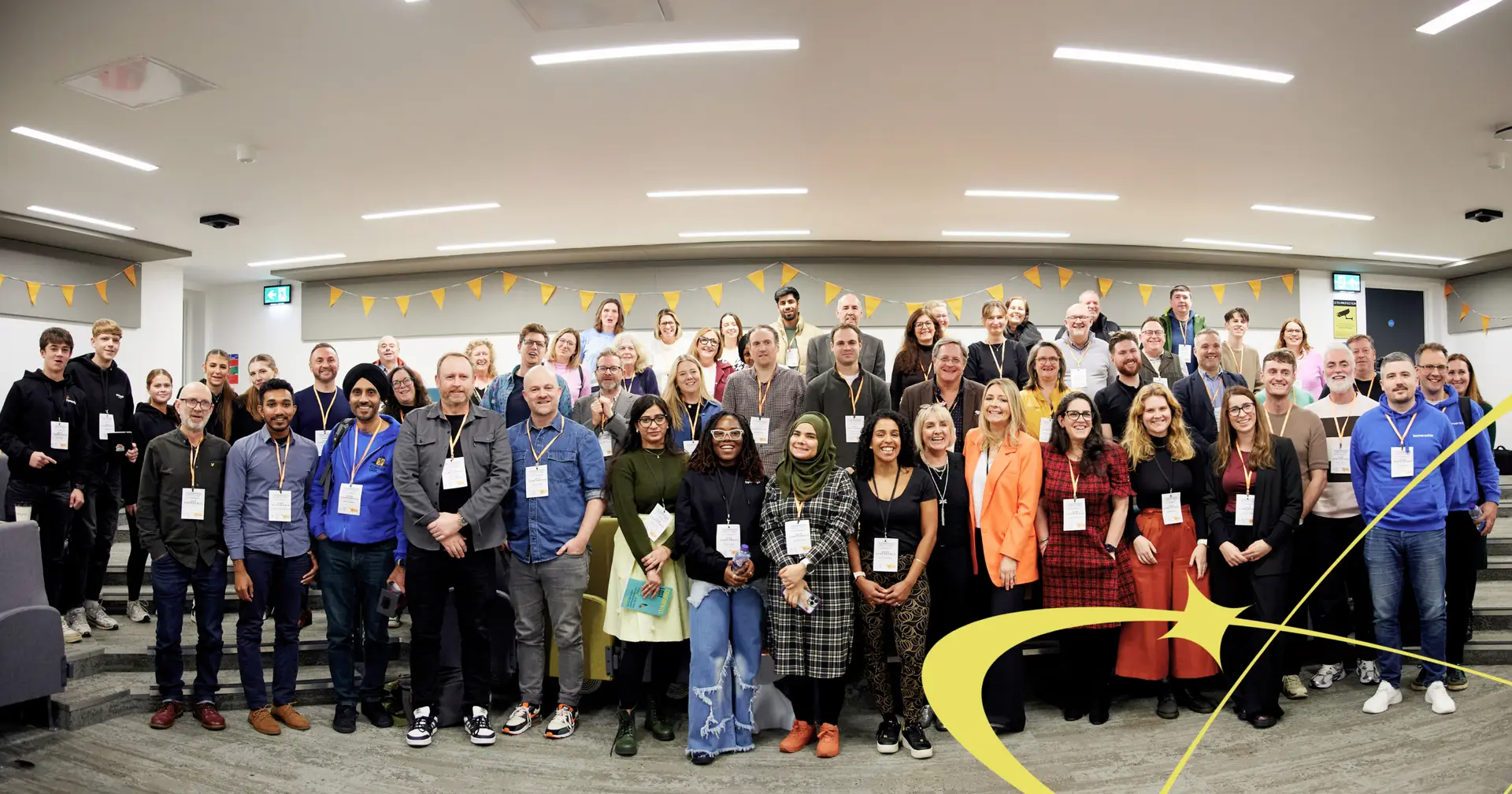
After 20 years in education and watching the rise of educational technology, Dr Clare Daly noticed something troubling: Scotland wasn’t investing enough in EdTech, and there was nothing pulling the community together in a meaningful way.
“Each year, London dedicates the entire week following Tech Week to EdTech,” Clare explains. “The city is saturated with events, conversation, and collaboration. Education isn’t treated as an add-on but as a central pillar of innovation. It raised a clear question: why not here?”
For Clare, it was about changing perceptions.
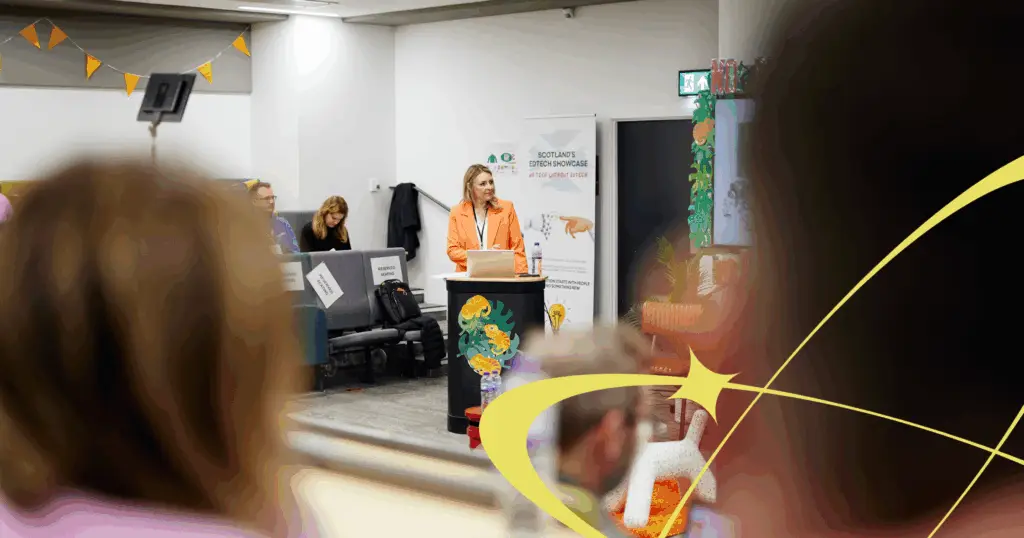
The path from concept to convening was not instantaneous. Clare had long highlighted the disconnect within Scotland’s EdTech landscape, noting the absence of visibility, collaboration, and shared momentum. Then came the shift.
“As with most things, raising the concern means taking responsibility for change,” she reflects. “The ecosystem’s response was clear: ‘We agree, now lead it.’”
Support from the Glasgow Tech Ecosystem provided the catalyst. The grant enabled her to secure speakers, host attendees properly, and, crucially, cultivate a space where meaningful professional relationships could take root.
What began as a clear vision rapidly became a shared endeavour. As planning progressed, the right expertise gathered around it: event delivery, communications, stakeholder coordination forming a team that matched the ambition and urgency of Scotland’s first EdTech showcase.
Ruby Sweeney from The Events Hub came on board to help deliver the event. Ruby brought her expertise in event planning and logistics, and crucially, she recommended Forumm to handle the registration and communications side of things.
“The most striking part was that the group assembled around the event included people who had never worked together before,” Clare reflects. “Yet from the outset, everyone moved with purpose. It became more than event organisation; it became ecosystem formation in real time.”
Ruby’s strategic advice was invaluable, e.g. suggested that hosting and executive leadership should sit separately. With that in mind, the MC role was allocated to the wonderful Patty O’Callaghan, who brought clarity and ease to the room while Clare remained focused on the broader strategic delivery.
The same collaborative mindset shaped the invitations. When outreach began, established EdTech companies responded with enthusiasm and a shared feeling that the gathering was not just timely, but long awaited.
“The response from established EdTech organisations was consistent: this was needed, it should have happened sooner, and there was genuine appreciation that it was finally being led.”
As the event evolved, it became clear that the definition of EdTech was far wider than many had assumed. Health innovators, creative technologists, and organisations working at the intersection of wellbeing and learning began to recognise themselves within the space.
Sectors that initially sat outside the frame soon aligned with it. Health, in particular, emerged as a natural fit: what is health technology if not a vehicle for helping people understand, manage, and improve their own lives?
This inclusive lens shaped the entire room a deliberate mix of academia, early-stage innovators, established companies, and cross-sector creators. The result was a landscape of perspectives that did not compete but complemented. Clare describes it as a tasting menu rather than a single course: varied, unexpected, and richer because of it.
The atmosphere that followed was not one-note or industry-bound. It became a space where boundaries blurred, shared purpose surfaced, and conversations formed between people who might never otherwise have crossed paths.
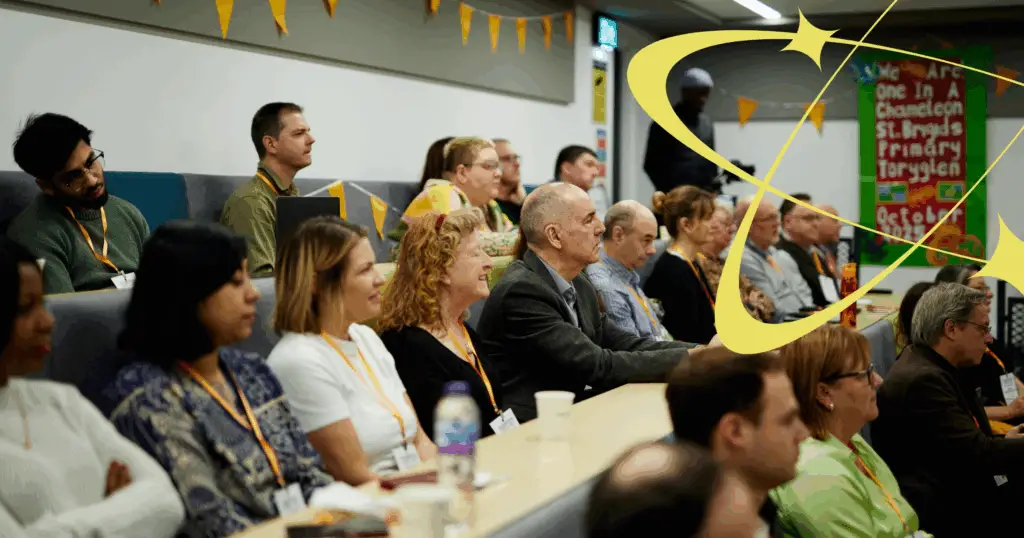
When it came to managing registrations, communications, and attendee coordination, Clare knew she needed support. As someone without an events background, the prospect of handling these logistics was overwhelming.
“When you’re organising an event, you’re having to organise the content, get the key people, arrange the logistics, and the last thing on my mind was the registration and onboarding. I’ve had events before that we just kind of cobbled together, and it’s a bit hit or miss because you don’t know who you’ve said yes to, or whether they’ll remember.”
Ruby’s recommendation of Forumm proved invaluable. As part of showcasing the Scottish tech ecosystem, Clare wanted to use a Scottish platform that understood the local stakeholders and had its own networks for sharing and promotion.
“In conversation, it was pretty quickly clear that Forumm are educating people about what’s actually out there, giving us a summary of what’s happening, events taking place, things you might be interested in. They are the very definition of EdTech. Every aspect of the foundational team developing the platform, I would consider EdTech. So it was a no-brainer.”
From the moment Forumm came on board, the administrative burden lifted. The platform handled everything from initial registrations to automated reminders, allowing Clare and Ruby to focus on content and creating the right atmosphere.
“When Forumm got involved, it just completely took that stress off. We knew that delegates would have the information. You could chase people up, send reminders. It just took all of that stress away. But probably more than that, it was very seamless with the rest of the team. Those who were presenting were being contacted, they were getting the information.”
The platform also enabled networking before the event even started, allowing delegates to see who else was coming and begin making connections.
Clare’s appreciation for the Forumm team was clear throughout our conversation.
“If I could give you 10 stars, I would. Right from the very start when I said I had an idea, it was, ‘Right, okay, let’s do this. Let’s take it to action points.’ At any point when I had any questions, there was always somebody on hand to get back to me straight away. I really did feel it was a team pushing forward together, and nothing was too much trouble.”
On the day, Forumm’s presence on the ground ensured that the event experience ran exactly as planned. Check-in, movement, and attendee flow were handled seamlessly, allowing Clare to concentrate on hosting the room, welcoming partners, and supporting meaningful conversation rather than operational details.
“What stood out was how genuinely shared it felt,” Clare reflects. “I didn’t need to hold every moving part. The support meant I could stay present with people, not logistics.”
As with any live event, a few unpredictable moments unfolded behind the scenes. A last-minute technical issue and a speaker running over time might have created pressure in a different context. Here, they didn’t. With delivery oversight in capable hands and attendee experience fully managed, Clare remained centred on the relational aim of the day: connecting organisations, nurturing the ecosystem, and giving the sector space to see itself together.
The result was not just smooth execution but clarity of purpose: operational confidence enabling leadership presence.
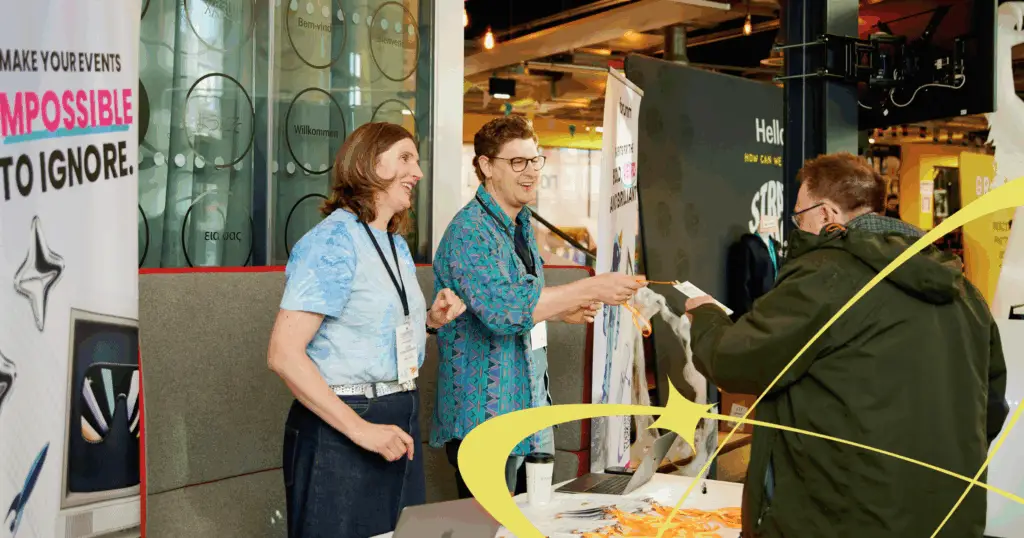
When everyone gathered, Clare witnessed something special. People genuinely wanted to be part of something.
“Everyone who came along wanted to be part of it. People wanted to showcase, people wanted to offer their support.”
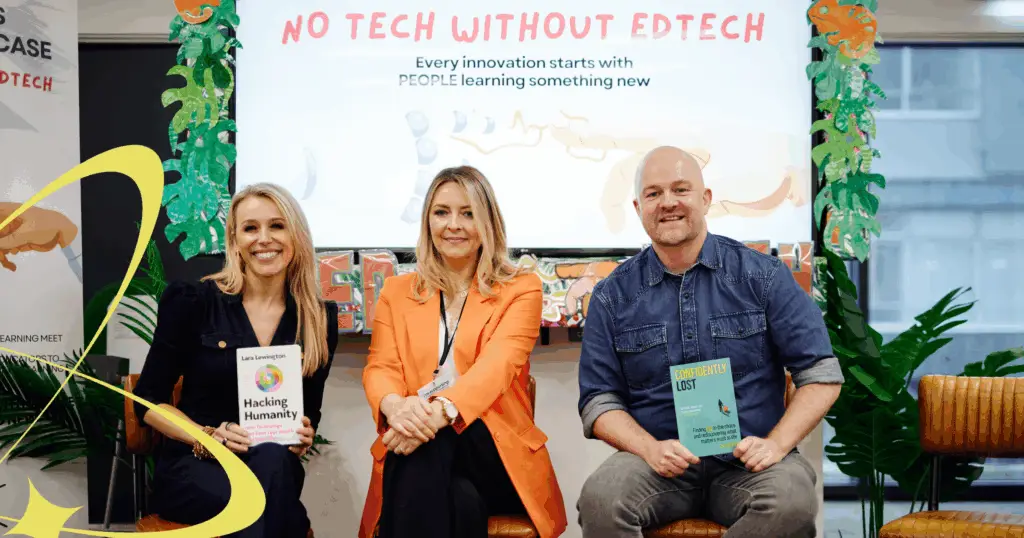
The keynote speakers set the tone. Lara Lewington, a health tech researcher, drew parallels between health technology and learning. Gavin Oattes, a seasoned educator who runs Tree of Knowledge, brought vulnerability and humour to his closing keynote, sharing from his recent book in a way that motivated people while allowing them to see the human side of education and technology.
“When Gavin speaks, we’re not talking about technology per se. We’re actually just talking about using that as a tool to get the audience. He is educating around the UK, and the only way for that to really be scalable is to use technology.”
One unexpected highlight came from Anna Rickards, a Scottish digital artist who live-illustrated the talks in real time. Most of her work was in Manchester, Liverpool, or London, never in Scotland. Having her there, drawing the key themes as speakers presented, gave everyone a visual artefact to remember the day and reflect on what they were communicating.
The event was supported by full roster of insightful speakers and sponsors:
Jacqui Ward (Cyber Education Scotland), Toni Scullion (dressCode), Martin Boath (Imaginary Friends), Shivoh Chirayil Nandakumar (RideScan), Jude Lean (Johnston Carmichael Chartered Accountants), Michael Hayes (Add Jam), and Brian Baglow (Scottish Games Network).
Barclays, University of Strathclyde, Glasgow City Council Tech Ecosystem, Johnston Carmichael Chartered Accountants, Everybody Counts and Estendio.
The tone of the event was collaborative, but not without necessary candour. One of the most pressing themes to surface was procurements, specifically, how excellent products struggle not because of quality but because of visibility, access, and market pathways.
The discussion was frank but constructive. Developers voiced the familiar challenge of knowing how to enter the market, while experienced buyers countered with an equally important perspective: products must be seen, communicated, and actively introduced to those expected to adopt them.
It was not confrontation but calibration, a room recognising its interdependence.
Rather than circling theory, these exchanges clarified practical needs:
As Clare observed, the conversation felt grounded in trust. The tension was not sharp but useful, the kind that generates alignment rather than division. In that setting, challenge became momentum, and critique became roadmap.
Perhaps the most valuable aspect of using Forumm came after the event. In Clare’s experience, follow-up is often the missing piece. A few photos get shared, but the momentum fades.
“After the event, because people were so keen to be involved and wanted to offer resources and follow-up things, I didn’t really have a forum to do that. You guys took all that on board.”
The platform enabled Clare to capture what people wanted to offer and facilitate those connections systematically rather than relying on memory or scattered emails.
Is there any point to having an event if there’s no behavioural change or follow-up? After the event, people were so keen to be involved and wanted to offer resources. Whereas in other events, that’s the bit that’s missing. There’s no follow-up, or you maybe get a few photographs of the day. We really managed to capture what people wanted to offer.”
The results were tangible: introductions to podcasts, free trials of AI tools, digital badges from Navigtr, and ongoing connections that Clare continues to see developing on LinkedIn and via email.
Success was never defined by a single day but by what continued afterwards, the partnerships sustained, the projects emerging, and the collective energy no longer operating in isolation.
Momentum has now moved into practical development:
What began as a showcase has evolved into a network with direction – not just who attended, but who will build together, who will contribute, and who is now aligned.
A notable outcome is the shift in tone across the sector. Discussions that once sat in the abstract now articulate next steps, shared opportunities, and a clearer sense of future alignment. Digital badging, piloted at the event through
Navigtr, is one example of how ideas immediately moved into practical exploration and potential rollout.
In that context, success is not a completed moment but an ongoing trajectory: partnerships activated, cross-sector conversations continuing with purpose, and structures beginning to form around an ecosystem that no longer needs to work quietly or separately.
Advice for Event Organisers
When asked what advice she’d give to someone running their own summit or showcase, Clare’s answer is immediate and clear:
“First thing: get a team. Don’t do it yourself. If you’re running an event, you’re running it because you have an idea you want to explore and content you want to show. Focus on that. Get a good team. Get Forumm. Get The Events Hub. Get a digital artist. Get a team around you to be able to deliver and let you focus on the stuff that you do best.”
She also emphasises the importance of minimising your own workload on the day itself.
“If you’re planning an event, you have so much work to do before it. Make the stuff you need to do on the day as minimal as possible, because people will want to talk to you. They’ve been invited by you, they want to tell you about what they do. You need to make sure there’s room for that. Your job if you’re creating an event is to network, look after people, focus on the content and relax.”
Looking Ahead
Clare is already thinking about next year. The format will likely change, perhaps not a full day, maybe more showcase-focused, possibly in a different venue with a different atmosphere.
The goal isn’t to replicate the first year but to build on it, to continue growing the connections and the sense of community. Clare, Ruby, and the Forumm team are already discussing ideas for next year’s event.
EdTech in Scotland is just getting started, and with the right team in place, the possibilities are endless.
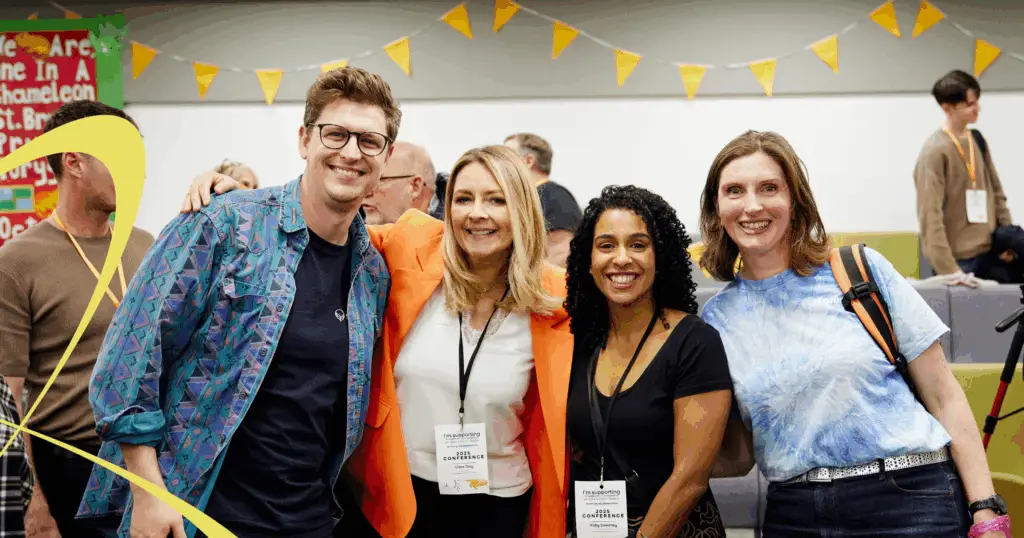
Dr Clare Daly is an educational psychologist with 20 years of experience, founder of Dynamo, and a lecturer at the University of Strathclyde. She specialises in dynamic assessment and is passionate about creating tools that reveal learner potential rather than simply measuring performance.
Ruby Sweeney runs The Events Hub, an event planning organisation that partnered with Clare to deliver No Tech Without EdTech. Ruby’s expertise in event logistics and strategic planning was instrumental in bringing the showcase to life.
Dynamigo made its first public appearance at the showcase, where CPP Chris demonstrated the early games build and PhD researcher Umbreen presented an academic poster on the successful Glasgow City trials. Positioned to complement rather than compete with existing EdTech, Dynamigo brings 21st-century assessment insight and a focus on PQ – potential quotient, adding depth to how we understand learner growth. Its presence aligned with the core message of the day: EdTech that collaborates, connects, and strengthens the ecosystem already in play.
Forumm is a Scottish events platform designed to help organisers create, promote, and manage events while building communities. The platform handles registration, communications, networking features, and post-event follow-up, allowing organisers to focus on content and connections.
The University of Strathclyde offered thoughtful institutional support as a university, recognising the cross-sector importance of the showcase. Its involvement helped situate the event within a broader national effort to align education, technology, industry, and innovation, signalling encouragement for continued collaboration and shared ecosystem growth.
Glasgow Tech Ecosystem provided the grant that made No Tech Without EdTech possible, with a focus on creating meaningful connections within Scotland’s tech community.
Anna Rickards a live event illustrator and 2D animator specialising in fun, colourful visuals. Anna specialises in active listening, taking complex information and visualising it in a fun and engaging way, creating infographics and live scribing as well as 2D hand drawn animation.
Tim Riches, CEO of Navigatr, spearheaded our pioneering partnership to bring the first EdTech Scotland digital credential to life. With his visionary leadership and deep commitment to innovation in education, he has helped shape a new standard for recognizing skills and learning beyond traditional qualifications.
Interested in partnering with a team that’s as invested in your event’s success as you are?
Whether you’re planning a small community meetup or a large-scale conference, we’re here for the journey.
Get in touch to see how Forumm can support your vision and how your insights can help shape the future of event technology for everyone.


An experiential, collaborative celebration of creativity, innovation, and community